Brad Butler & Karen Mirza Create New Languages for Political Resistance in “Direct Speech Acts”

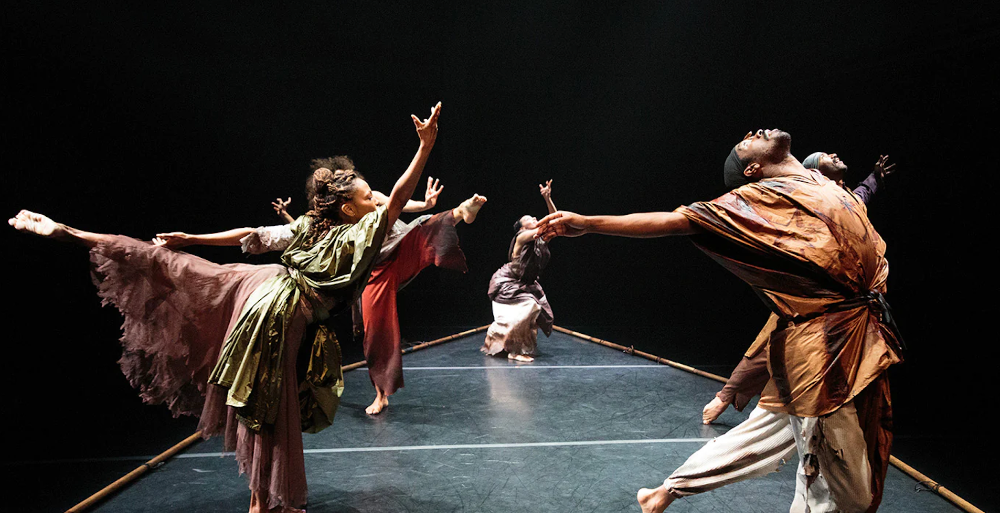
Brad Butler and Karen Mirza, Direct Speech Acts, Act 00157
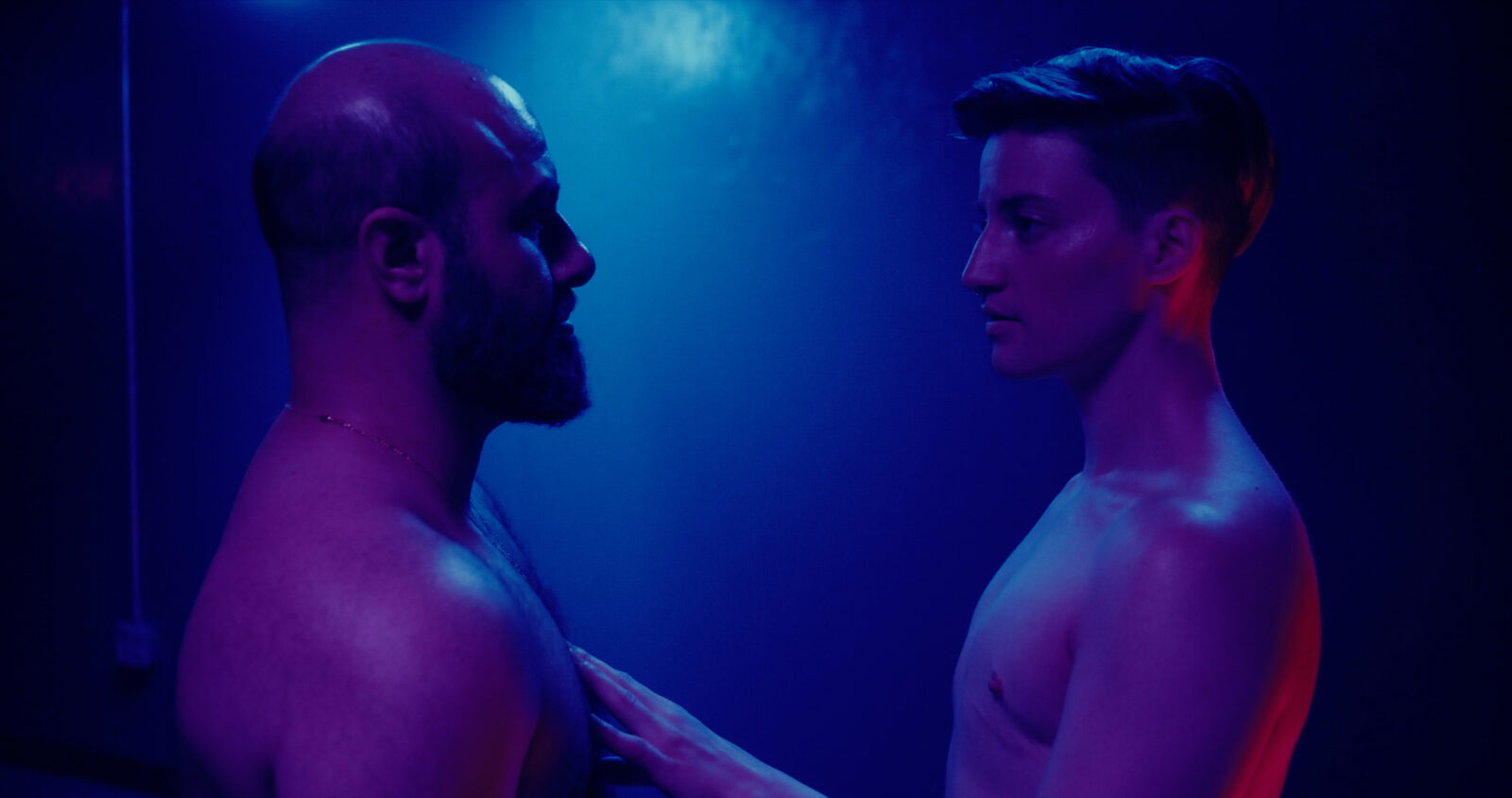
Brad Butler and Karen Mirza, still from Direct Speech Acts, Act 00157

Brad Butler (2012 Film/Video) and collaborator Karen Mirza premiere the Creative Capital-supported project, Direct Speech Actsin the exhibition The Museum of Non Participation: The New Deal at the Walker Art Center in Minneapolis, April 18 – July 14.

Direct Speech Acts is a film series made in collaboration with non-actors, dancers, theorists and activists performing urgent forms of fearless speech in attempts to create new languages for resistance. These videos are part of Butler and Mirza’s ongoing project The Museum of Non Participation, a fictional museum that serves as the conceptual platform for questioning and challenging current conditions of political involvement and opposition. Through film, sound, text and performed actions, the London-based artists ask: How does one participate in or withdraw from political realities individually and collectively? How can passive forms of resistance or “non participation” be represented and verbalized, and how can art facilitate or intervene in this process?  Continue reading

A Page from Our Handbook: Building Your Internet Presence

Every few weeks, we’ll be posting tips straight from the Professional Development Program’s Artist’s Tools Handbook—a 200+ page resource we give to Core Workshop attendeeswritten by PDP Core Leaders Jackie Battenfield and Aaron Landsman. The book covers everything from writing to budgeting, websites to fundraising, elevator pitches to work samples. Similarly, each post will be packed with practical ideas to make your life run more smoothly, leaving you even more time for your creative practice. Learn more about our PDP workshops here.

Building Your Internet Presence
Because the Internet is contemporary culture’s primary means for communication and information dissemination, having an active online presence is essential for artists. The web continues to rapidly evolve, so what follows are some basic ways to think about building and refining how you represent yourself and your work online.

Keep in mind that more is not always better. Some artists use nothing but a Facebook fan page and Twitter feed as their online presence and do just fine, while others have six blogs, three websites and many social media outlets, but it’s hard to understand what they do. What’s most important is for you to find the best way to communicate the clarity, force and excellence of your work and put that online.  Continue reading

The In-Between: Artists Build New Frameworks for Institutions

Campaign for Prison Phone Justice
Nick Szuberla’s Campaign for Prison Phone Justice

Nick Szuberla, after working on his Creative Capital project Thousand Kites for several months, found himself sitting in front of what he described as “an amazing database.” He and his collaborators, Amelia Kirby and Donna Porterfield, had been in contact with hundreds of community members in the Appalachian region, interviewing them about their experiences with two local super-maximum security prisons. The artists intended to compile the material into scripts to read aloud and broadcast over the radio in the communities most affected by the nearby prison complexes. While people had a lot to say about their experiences, to Szuberla’s surprise, the most prevalent concern from family members was the high cost of phone calls to their loved ones behind bars.  Szuberla discovered that under many states current communications systems, phone calls to incarcerated individuals cost up to $3.80 a minute. Some families found themselves paying $20-30,000 a year on phone calls alone.

Szuberla found that many state governments are receiving kickbacks from local phone companies for these calls—up to 60% of the cost. Although there are currently eight states that have banned prison phone kickbacks, Szuberla, Kirby and Porterfield felt that more could be done. So they started the Campaign for Prison Phone Justice, an advocacy group committed to changing the price of these phone calls and giving families the opportunity to be connected again.

Over the years Creative Capital has noticed that an increasing number of grantees have decided to start their own organizations. We’re realizing that the financial and advisory services we provide our grantees help them not only complete their artistic projects but also find ways to address other needs in our society. These new institutions have focused on issues of social justice, food, product development and critical thinking skills.  Continue reading

Kalup Linzy Premieres “Romantic Loner” at MoMA PS1 and Through Online Release


Kalup Linzy (2008 Visual Arts) has released the feature film component of his Creative Capital project, Romantic Loner, online through YouTubeRomantic Loner tells the story of Linzy’s alter ego, Kaye, who, after a series of failed relationships, attends an artist residency and has an intensive period of soul-searching. The majority of the film was shot at Headlands Center for the Arts in Sausalito, CA, in 2012, when Linzy was supported by an Alumni Awards Residency. Along with the film, the Romantic Loner project also encompasses two shorts, prints, a live performance event, and an original soundtrack album, which is available through iTunes and other digital outlets.

In conjunction with the release, Tribeca Film Institute and MoMA are co-presenting a live performance version of Romantic Loner at MoMA PS1 on Sunday, April 14 at 4:00pm. Accompanied by a six piece band and video projections, Linzy will perform original songs from the film, including Man PussyChest Full of Tears and Kaye’s Theme (OK), along with cover tunes.

I connected with Kalup to learn more about how the Romantic Loner film, the music and what’s next for this prolific artist.

Jenny Gill: You started working on Romantic Loner during a residency at the Headlands Center for the Arts in California, and the idea of “soul searching” is a key theme in the work. How did your experience at Headlands shape the project?

Kalup Linzy: I wrote a treatment for the film and applied to the Headland’s alumni residency. After receiving word that I had been selected, I shot scenes here in Brooklyn, planned what I could make happen at Headlands, and what else needed to been done when I returned. Because I had been at Headlands in 2010, I knew where I was going and what to expect. The artist residents receive a stipend, free meals, cars to check out and drive. I was there for four weeks and was able to shoot plenty. Continue reading

The MAP Fund’s 2013 Grantees: 41 Groundbreaking Performance Projects

MAP Fund 2013 grantees
Top, left to right: New York City Players, Nora Chipaumire, Thaddeus Phillips, Cloud Eye Control. Bottom, left to right: Yosvany Terry, Laura Arrington and Jesse Hewitt, luciana achugar, The Civilians.

The MAP Fund, administered by Creative Capital, supports artists, ensembles, producers and presenters whose contemporary performance work embodies a spirit of exploration and deep inquiry. With today’s announcement of 41 breathtaking projects that make up the 2013 round, we are pinching ourselves at the privilege of this work!

Thanks to the generous support of our funders, the Doris Duke Charitable Foundation and the Andrew W. Mellon Foundation, MAP will provide $1.4 million in project-specific and (ever more rare) general operating cash grants. In a clear testament to the vibrancy of the field of contemporary experimental performance, the works were selected from among more than 800 proposals and reviewed by a small army of artists and arts professionals from all over the U.S. The result is a dream-team of composers, choreographers, playwrights, directors and performers who will, no doubt, teach us to believe the unbelievable and fathom the unfathomable.  Continue reading

Byron Au Yong and Aaron Jafferis Explore Entrapment and Immigration in “Stuck Elevator”

Byron Au Yong and Aaron Jafferis (2009 Performing Arts) will have the world premiere of their Creative Capital project, Stuck Elevator, at American Conservatory Theater in San Francisco, April 4-28. Stuck Elevator is an eclectic music-theater work based on the true story of a Chinese deliveryman in the Bronx who was trapped in an elevator for 81 hours. Sounding the alarm would open the doors to freedom, but calling for help also means calling for attention—with dire consequences for this undocumented immigrant. Suspended between the upward mobility of the American dream and a downward plunge into an empty abyss, he delves into memories of his past and into nightmares of his present predicament, all within the confines of a 4’ by 6’ by 8’ metal box.

I connected with Byron and Aaron while they were in rehearsals at A.C.T. to learn more about the development of this unique project.

Jenny Gill: I love the concept behind Stuck Elevator—using the true story of a deliveryman stuck in an elevator to tell a larger story about the difficulties of an immigrant’s experience. How did you hear about this story and how did you begin to envision a theater work around it?

Byron Au Yong: In 2005, I was a student in New York City and saw news articles about a missing deliveryman. Because several Chinese food deliverymen had been killed for the cash they carried, people assumed the worst. When they found the man, alive after 81 hours trapped in a Bronx elevator, the news reported he’d paid $60,000 to be smuggled here, had a wife and son back in Fujian Province, and rode a bicycle to work. This resonated with me because I was also in New York City with a $60,000 debt (grad school!), my grandparents left Fujian Province, and I was the same age as this deliveryman. Continue reading

Bringing Art to the People: Eight Ways a Cultural Event Can Transcend Genre, Geography and Demographics

O Miami montage

Our friends at the Knight Foundation recently published this great article by Scott Cunningham on lessons learned in organizing a poetry festival for Miami-Dade County, an exceptionally diverse community of 2.6 million people. Scott and the Knight Foundation are putting these lessons to use as they prepare for the second O, Miami Poetry Festival, which will take place throughout the month of April in celebration of National Poetry Month.

Three years ago, a group of friends and I started to dream up what a lot of people considered impossible: a festival that would bring poetry to all 2.6 million residents of Greater Miami.

At that time, Miami’s cultural scene was exploding. Art Basel was in full force, and we wanted to do a festival that was the opposite of the “pipe-and-blazer” readings that most people associate with poetry. We wanted to do a festival that reflected Miami’s diversity and personality.

Knight Foundation had just finished the first round of its famous “Random Acts of Culture” and we liked how those events turned everyday occurrences into cultural occasions. What if we did something like that? What if we did it every day for a month?  Continue reading

LaToya Ruby Frazier Presents Intimate Portraits of Family and Community at the Brooklyn Museum

0012grandma-ruby-and-me  LaToya Ruby Frazier, Grandma Ruby and Me

LaToya Ruby Frazier (2012 Visual Arts) has been photographing her family and her hometown of Braddock, PA, since she was 16, bearing witness to Braddock’s decline from a booming steel mill town to a “distressed” municipality with widespread pollution and increasingly scarce jobs.

This Friday, LaToya’s first solo museum exhibition opens at the Brooklyn Museum. Through the 40 photographic works presented in The Haunted Capital, Frazier offers an intimate portrait of the effects of deindustrialization on the lives of individuals and communities.  Continue reading

PDP Stories: North Carolina Writer Belle Boggs on How PDP Changes Lives

2013 is a landmark year for Creative Capital—we’re celebrating the tenth anniversary of our Professional Development Program! In that decade, we’ve worked with more than 5,500 artists in 150 communities. In honor of each of those artists, we present the new monthly series PDP Stories, in which we’ll share our participants’ accounts of how we’ve impacted their careers and lives.

This month’s PDP story comes from Belle Boggs, a writer from Pittsboro, NC, who took the Core Weekend workshop through the North Carolina Arts Council in 2011. A year after her workshop, Belle wrote to us:

I realized today that it has almost been a year since my life changing Creative Capital workshop, and I thought with excitement about the lucky North Carolina artists and writers who will be participating this year. I wanted to share with you some of the ways that weekend has changed my work and my life.

When I began the workshop, I was exhausted from trying to balance a writing career with teaching a demanding five-­course load at a charter high school. I thought that I had somehow ruined my career by teaching high school—that ­no university would want to hire me—­and was trying very hard to build my C.V. while maintaining the job that I depended on financially (and loved, in many ways). But the balance wasn’t working; I was only writing in the summers and on holidays, and I found myself missing important opportunities. Every sick day I could manage, I used to attend workshops, give readings, and travel for my book. I knew that something had to change, and that feeling grew stronger as I listened to the Creative Capital workshop leaders present about valuing what truly feeds your work (and your life). I signed up for a one-on­-one conference with Colleen Keegan because I knew she would tell me I needed to quit my job. She did—using exactly the supportive, smart words I needed to hear. Continue reading

A Page From Our Handbook: Creating Your Artist Resume

Every few weeks, we’ll be posting tips straight from the Professional Development Program’s Artist’s Tools Handbook—a 200+ page resource we give to Core Workshop attendeeswritten by PDP Core Leaders Jackie Battenfield and Aaron Landsman. The book covers everything from writing to budgeting, websites to fundraising, elevator pitches to work samples. Similarly, each post will be packed with practical ideas to make your life run more smoothly, leaving you even more time for your creative practice. Learn more about our PDP workshops here.

Resume Basics: An artist’s resume is a listing of your professional experiences, achievements and credentials, organized into categories for easy scanning by the reader. A resume lists the facts that place you in your discipline and reflects where you have already received support.

Length: A resume can be from 1-3 pages depending on your experience and who will receive it.

Best Practices:

  1. Maintain a list of everything you have done in your career (a Curriculum Vitae or C.V.). It may not be the document you distribute, but it will reflect your entire professional history, so it’s an important document to keep.
  2. Unlike a C.V., your resume is a fluid document that can and should be tailored for a particular opportunity. You may also have different kinds of resumes: one will be shaped for exhibition/performance/publication opportunities, while another may be used to apply for jobs or freelance situations, or to stress your activities as an educator, producer, curator or critic.
  3. As you accumulate professional experiences, begin to eliminate lesser listings. Choose only the most important and title the category “selected.” This alerts the reader to the fact that you have done more than what’s listed. Continue reading