The 2013 Doris Duke Artists on Facing Creative Challenges

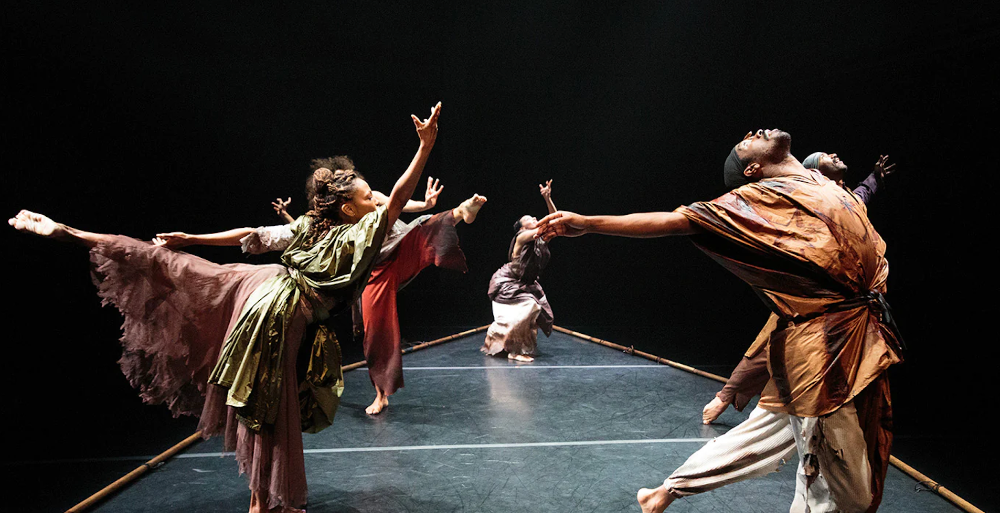
Miya Masaoka performing
Miya Masaoka, one of the 2013 Doris Duke Artists

What challenges do U.S. performing artists face?

In order to better get to know the extraordinary class of 2013 Doris Duke Artists, we asked them, among other things, about the biggest creative challenges they face as artists. Their answers were remarkably open, thoughtful and inspiring.

For example, Stacy Klein, Founder & Artistic Director of Double Edge Theatre, describes ongoing challenges that she proudly overcame during the creation of her most recent work, The Grand Parade (of the 20th Century): “Struggling determinedly to develop this work over the past two years according to my own criteria, and not the maddening voices of presenters, critics and fashion arbiters, I found the route to my own narrative and identity—visual, emotional, personal, female and American.”

Jazz pianist and composer Myra Melford cited a similar battle to achieve her personal vision: “My life’s work is about going as deeply as I can into the creation of my own music and the cultivation of my own voice… I strive to make all of my musical and life experience coherent internally.” Continue reading

Creative Capital at PULSE NY: Auction Preview + Franco Mondini-Ruiz’s “Spring Flings & Pretty Things”

Creative Capital at PULSE NY 2013

This weekend, we’re at PULSE NY (May 9-12) presenting our 2013 Auction Presale, featuring work by LaToya Ruby Frazier, Ken Gonzales-Day, Simone Leigh, Lisa Sigal, Kerry Skarbakka, Trimpin and other amazing Creative Capital grantees. The tree you see on the right side of the photos is Sam Van Aken’s Tree of 40 Fruit. Through a process of sculpting by way of grafting and pruning, Van Aken has created a group of trees that, when mature, will have the capacity to grow over 40 varieties of fruit. You can learn more his project and all the auction artworks at auction.creative-capital.org.

Continue reading

Artist to Artist: Lisa Bielawa and Arturo Vidich Talk Performance in the Unlikely Spaces of Abandoned Airfields

Lisa Bielawa, Tempelhof Field
Lisa Bielawa will stage a musical performance at Berlin’s Tempelhof Field May 10-12.

Artists Lisa Bielawa (2006 Performing Arts) and Arturo Vidich (2013 Performing Arts) have more in common than meets the eye. Though they work in different media­—Bielawa is a musician and composer, Vidich is a choreographer—both Creative Capital grantees are taking on community-building and place-making in an unusual space: the repurposed military airfield.

Bielawa’s Airfield Broadcasts project has two iterations, one at the Tempelhof Field in Berlin (premiering this weekend, May 10-12) and the other at Crissy Field in her native San Francisco (October 26-27). Each performance involves between 100 and 1,000 musicians, from student groups to professional orchestras, performing Bielawa’s hour-long composition in these massive public spaces for audiences both intentional and accidental. Bielawa incorporates musical composition and choreography to fully explore the sonic and spatial relations of each former airfield.  Continue reading

Tamms Is Torture: Artists & Activists Campaign to Close an Illinois Supermax Prison

Melvin Haywood campaigning to close Tamms SupermaxMelvin Haywood, pictured above, spent eight years in solitary confinement at Tamms Supermax until the Prisoner Review Board granted him parole from prison.

Artist Laurie Jo Reynolds (2012 Emerging Fields) and art historian Stephen F. Eisenman co-authored an account of the five-year campaign to close the Tamms Supermax Prison in Illinois. Their story follows, and you can find the full article on Creative Time Reports.

Illinois Lost Its Head
In 1998, Illinois opened a prison without a yard, cafeteria, classrooms or chapel. Tamms Supermax was designed for just one purpose: sensory deprivation. No phone calls, communal activities or contact visits were allowed. Men could only leave their cells to shower or exercise alone in a concrete pen. Food was pushed through a slot in the door. The consequences of isolation were predictable: many men fell into severe depression, experienced hallucinations, compulsively cut their bodies or attempted suicide.

The first men at Tamms were transferred there from other prisons around the state for a one-year shock treatment intended to break down disruptive prisoners and make them more compliant. But the Illinois Department of Corrections (IDOC) left them there indefinitely. A decade later, more than a third of the men at Tamms had been there since it opened, and for no apparent reason.  Continue reading

PDP Stories: Artist Carmella Jarvi on How PDP Inspired Her to Dream Bigger

2013 is a landmark year for Creative Capital—we’re celebrating the tenth anniversary of our Professional Development Program! In that decade, we’ve worked with more than 5,900 artists in 170 communities. In honor of each of those artists, we present the new monthly series PDP Stories, in which we’ll share our participants’ accounts of how we’ve impacted their careers and lives.

This month’s PDP story comes from Carmella Jarvi, an artist from Charlotte who has attended five PDP workshops in North Carolina since 2004.

I have always been an artist and a teacher. I taught public school art for 13 years right out of college while continuing my own artwork on the side. I won some grants and always had a trickle of sales. But, as much as I enjoyed teaching high school, my art and my own career always got the leftovers.

In December of 2004, I attended my first Creative Capital PDP one-day seminar, sponsored by the North Carolina Arts Council. This opened up the possibility of leaving teaching and pursuing my own dreams.

In summer 2005, I attended a weekend Creative Capital PDP retreat in the North Carolina mountains. At the end, they said, “Write down a big goal.” I wrote down that I wanted to leave teaching at the end of that school year.  Continue reading

Ken Jacobs, A Pioneer of American Experimental Cinema

Ken Jacobs (2012 Film/Video) will premiere two new films supported by Creative Capital in Carte Blanche: Ken Jacobs at The Museum of Modern Art in New York, May 2–5. The exhibition, commemorating the 80th birthday of this pioneer of American experimental cinema, includes films chosen by Jacobs from MoMA’s collection alongside selections of his own work. You can browse the Carte Blanche screening schedule and read film notes by Jacobs on the MoMA website.

After more than 50 years as a filmmaker, Jacobs remains as innovative and productive as ever. The two films premiering in Carte Blanche: Ken Jacobs, entitled Joys of Waiting for the Broadway Bus and A Primer in Sky Socialism, both represent Jacobs’ current exploration of digital 3-D filmmaking. Joys of Waiting for the Broadway Bus was shot by Jacobs over the course of several bus rides in his New York City neighborhood. Jacobs writes, “Since acquiring a small 3-D camera, I dawdle everywhere, but prolonged bus-waits allow for a continuity of images, and thus a movie.” Ken presents each 3-D still onscreen for 6 to 8 seconds, instead of the usual rapid turnover used to create the illusion of movement. The result is a dense optical event that will be presented in four 40-minute parts as the close to each day’s screenings at MoMA.  Continue reading

Anita Chang’s “Tongues of Heaven” Asks, What Is Lost When a Language Disappears?

Anita Chang, stills from "Tongues of Heaven"
Anita Chang, stills from Tongues of Heaven

Anita Chang (2008 Film/Video) will premiere her Creative Capital project, Tongues of Heaven, at the Los Angeles Asian Pacific Film Festival, with screenings May 4 (2:30pm, CGV Cinemas) and May 11 (12:30pm, Art Theatre of Long Beach). Set in Taiwan and Hawai’i, Tongues of Heaven focuses on the questions, desires and challenges of young indigenous peoples to learn the languages of their forebears—languages that are endangered or facing extinction. Using digital video as the primary medium of expression, four young indigenous women from divergent backgrounds collaborate and exchange ideas to consider the impact of language on identity and culture.

I connected with Anita to learn more about this new film and her experimental approach to documentary.

Jenny Gill: Your film focuses on disappearing languages in Taiwan and in Hawai’i. Does your interest in either of these areas come out of your own ancestry? How and when did you first become interested in disappearing languages?

Anita Chang: The issue of a language not being passed down to the next generation has always been a part of my life. My first language was Taiwanese or Minnanese, which is still the language my parents speak. I gradually lost my ability to speak it when I started learning English in the U.S. However, I can still understand it quite well. I recall many moments when my grandmother would complain that my brother and I did not speak Minnanese, or that my mother did not pass it down to us. In fact, as children it was my brother and I who fiercely protested against speaking it, explaining to my mother that no one else in our small town in Ohio was speaking it. Continue reading

Internet for Artists: Why We Only Recommend Two Website Services

Steve Lambert's website, created with WordPress
Steve Lambert’s website, visitsteve.com, was built in WordPress.

There are dozens of services and software to use in building your web portfolio, but Creative Capital’s Internet for Artists (IFA) team only recommends two.

It’s not because we’re unaware. We research every tool we come across and we’re told about them all the time. Still, we recommend that participants in our workshops use either Squarespace or their own installation of WordPress software (not WordPress.com). Nothing else.

We have good reason for only recommending these two solutions and we think you will agree with our reasoning below. However, if your site is currently serving your needs and goals well, we are not necessarily encouraging you to immediately rebuild with these better options. Just know that these options are available when the time comes.

There are many factors we weigh when making these recommendations. Here’s a few high points:

No. 1: We want you to have flexibility.

Many artists we have worked with are unable to maintain their own web presence because they have no control, no support, and no where to turn but to a “webmaster” who has disappeared. They’re essentially stuck and we don’t want that to ever happen to you. Continue reading

Arts Writers Grantee Negar Azimi on “Bidoun” and the Iranian Avant-Garde

Bidoun #28 CoverThe Creative Capital | Warhol Foundation Arts Writers Grant Program is accepting applications through May 15. With a month left to apply, we’d like to share an in-depth look at one of the writers awarded a grant last year. Negar Azimi, whose project The Shahbanou and the Iranian Avant-Garde won a 2012 Arts Writers grant in the book category, is senior editor of Bidoun, an award-winning publishing, curatorial, and educational initiative with a focus on the Middle East. Irreverent and conceptually adventurous, Bidoun magazine covers an eclectic array of art and culture: its latest, #28, features an interview with Italian philosopher Giorgio Agamben about pets and animals, and a conversation with Larry Gagosian in which Azimi turns the art magnate’s attention away from the market to the Armenian diaspora of which he is an influential, but under-recognized part. In addition to her work with Bidoun, Azimi has written for Artforum, friezeHarper’s, the Nation and the New York Times Magazine, among other publications. I asked her about what’s next for Bidoun and how the idea for her forthcoming book came about.

Kareem Estefan: Bidoun was founded in 2004 as a magazine focused on art and culture from the Middle East. Since then, it’s also functioned as a library, a curatorial initiative, and an educational space with arts writing workshops. Having expanded from a little-known publication to an internationally recognized hub for various critical and curatorial activities, can you reflect on Bidoun‘s mission and what’s next for you?

Negar Azimi: We’re approaching our tenth anniversary, so we’re currently thinking through where we’ve been and where we’re going. I think, in part, we hope to become an incubator for all sorts of projects. You’ve probably noticed that our version of the Middle East includes Los Angeles, Detroit, New Delhi…we’d like to carry this forward by nurturing projects with partners who, like us, think expansively about culture, whether they’re our own fantastic contributing editors or people from outside of our immediate network. Continue reading

Brad Butler & Karen Mirza Create New Languages for Political Resistance in “Direct Speech Acts”

Brad Butler and Karen Mirza, Direct Speech Acts, Act 00157
Brad Butler and Karen Mirza, still from Direct Speech Acts, Act 00157

Brad Butler (2012 Film/Video) and collaborator Karen Mirza premiere the Creative Capital-supported project, Direct Speech Actsin the exhibition The Museum of Non Participation: The New Deal at the Walker Art Center in Minneapolis, April 18 – July 14.

Direct Speech Acts is a film series made in collaboration with non-actors, dancers, theorists and activists performing urgent forms of fearless speech in attempts to create new languages for resistance. These videos are part of Butler and Mirza’s ongoing project The Museum of Non Participation, a fictional museum that serves as the conceptual platform for questioning and challenging current conditions of political involvement and opposition. Through film, sound, text and performed actions, the London-based artists ask: How does one participate in or withdraw from political realities individually and collectively? How can passive forms of resistance or “non participation” be represented and verbalized, and how can art facilitate or intervene in this process?  Continue reading